
The recipe for Indian higher education institutions to succeed in the global markets is excellence in academics, promoting contemporary socially relevant material, and enabling individuals (learners) to realise their full potential, suggests N Ravichandran.

The University of Melbourne and the Indian Institute of Science Education and Research (IISER) Tirupati have launched a new 2+2 Bachelor of Science Integrated (Honours) dual degree. This programme offers Indian students a globally connected, research-intensive science education, allowing them to study two years at IISER-Tirupati and two years in Melbourne, graduating with two honours degrees.

Researchers at IIT Guwahati have developed advanced traffic stream models using high-resolution drone data from a Delhi highway. These models are specifically designed to analyse and predict traffic movement under the heterogeneous conditions prevalent on Indian roads, addressing limitations of existing global models. The study aims to improve traffic management, road design, and intelligent transportation systems in India.

Shubham Kumar from the IIT-Delhi zone has secured an All India Rank (AIR) in the IIT-JEE Advanced 2026 results declared by IIT-Roorkee.
Researchers at IIT Guwahati have conducted a study on how plants' internal plumbing systems respond to drought conditions. Their findings, published in "Applied Physics Reviews journal," reveal that plants narrow their microtubes and pits during water shortages to conserve water and maintain internal balance, offering crucial insights for developing drought-tolerant crops.
Researchers from the Indian Institute of Science (IISc) and Technical University of Denmark have developed a recombinant antivenom that provides broad protection against the venom of spectacled cobras, monocled cobras, and Indian king cobra species in mice. This lab-produced antivenom offers a next-generation solution to traditional animal-derived antivenoms, addressing issues like variability and limited species coverage.

Educationists and policy experts at the Indian Statistical Institute (ISI) in Kolkata emphasised the critical need for developing a robust database, leveraging modern technology and artificial intelligence, to enhance effective policymaking. The two-day conclave, featuring prominent speakers like Prof S Mahendra Dev, highlighted the ongoing transformation in official statistics and the importance of public trust and research.
Researchers from Goa Institute of Management (GIM) and Goa Business School conducted a study analysing over 1.31 lakh posts on social media platform X using machine learning models. They found that indirect aggression is most common during major social, financial, sporting, and political events in India. The study classified aggression into overt, covert, and non-aggressive forms, noting that overt aggression remained relatively low but peaked during events like India's T20 World Cup loss. The findings have significant implications for online moderation and communication policies.
Indian researchers from ICMR-National Institute for Research on Women's Health and IIT Bombay have developed an indigenous "placenta-on-chip" platform. This microphysiological system mimics the human placental barrier, reproducing essential functions like hormone production and nutrient transfer. It offers a simple, scalable tool for studying placental biology, pregnancy complications, and drug effects, aiming to reduce reliance on animal experimentation.

'Peter Hegemann was so kind that a paper published in 2010 in Nature Method which mentioned optogenetic as a tool of the year, he wrote, 'My graduate student Suneel Katariya was the one who identified gene in coding channelrhodoxin and that was the turning point of my research'.'
Researchers from IIT Bhubaneswar and Virginia Commonwealth University have theoretically predicted a new two-dimensional material, a FeCl3 monolayer, exhibiting i-wave altermagnetism. This discovery holds significant potential for developing faster, more compact, and energy-efficient electronic devices, including applications in high-density memory, spintronics, and quantum technologies.

rediffGURU Radheshyam Zanwar, founder of Zanwar Classes, clarifies doubts and guides young aspirants on eligibility for science, and engineering entrance exams.
Researchers at the Indian Institute of Science (IISc) in Bengaluru have discovered that oral cancer cells are vulnerable to low-frequency ultrasound, a technique that can selectively destroy them while leaving healthy cells unharmed. This vulnerability is linked to reduced levels of the mechanosensory protein Tropomyosin 2.1. The study suggests ultrasound mechanostimulation could offer a safer, more targeted treatment for oral and other accessible cancers.
Defence Minister Rajnath Singh advised students at Babu Banarasi Das University to not be confined by their academic degrees, encouraging them to follow their interests and adapt to emerging technologies like AI. He emphasised the importance of skills over qualifications, drawing examples from successful individuals who ventured beyond their initial fields. Singh also touched upon spirituality, India's cultural heritage, and the true essence of politics, urging students to contribute to national progress and secure borders.

South African jurist Navanethem 'Navi' Pillay, of Indian origin, has been awarded the 2026 Nobel Peace Prize for her lifelong dedication to advancing human rights, peace, and international law, including her significant contributions to shaping international law on genocide and sexual violence.

An Indian-origin engineer couple, Anuradha and Vikas Sinha, have donated $20 million to the University of North Texas (UNT) to establish the Anuradha and Vikas Sinha College of Artificial Intelligence and Advanced Analytics. This significant gift aims to create new opportunities for students and faculty, focusing on building and deploying intelligent systems and understanding their operation within human contexts. The donation underscores the couple's belief in education and immigrant contributions to the American dream, supporting leadership, scholarships, professorships, research, and entrepreneurship.

rediffGURU Nayagam PP guides aspirants on how to pick the right career course and college based on their entrance scores and aptitude.
Researchers from IIT Guwahati and BHU have devised an eco-friendly biological method to treat textile wastewater, specifically targeting toxic azo dyes. Their novel bacterium, 'Brevundimonas sp. AJZ05', effectively degrades 98.50 per cent of Direct Blue-6 dye, producing non-toxic byproducts, offering a sustainable alternative to conventional chemical treatments.

With the duration of stay capped at four years, the biggest impact of the new F-1 visa rules is likely to be on PhD scholars, students enrolled in longer professional programmes, those whose graduation gets delayed and students moving from one academic programme to another, highlight education experts.
Banaras Hindu University (BHU) has received approximately Rs 15 crore in funding from the Indian Council of Medical Research (ICMR) for six biomedical research projects. These projects aim to address critical national health priorities, including cancer detection, antimicrobial resistance, and pediatric septic shock, fostering advanced research and improving patient care.

Researchers at IIT Bombay have developed a novel, low-cost, and highly durable catalyst using cobalt, nickel, phosphate, and graphite. This breakthrough material can accelerate both hydrogen and oxygen generation from water, significantly reducing the production cost of green hydrogen by eliminating the need for expensive noble metals like platinum and iridium.

The objective should be clear: Energy security without abandoning environmental responsibility; water security without ignoring local concerns; and strategic resilience without sacrificing public confidence, notes Varun Arya.
Researchers at BRIC-RGCB in Thiruvananthapuram have developed a novel nanopore-based sensing technology. This innovation allows for the early and highly sensitive detection of biomarkers associated with neurodegenerative diseases like Parkinson's and ALS, addressing a critical challenge in current diagnostic methods. The technology, published in Nature Nanotechnology, uses self-assembling dual-diameter nanopore sensors to identify disease-specific biomarkers even at low concentrations.

Researchers at IIT-Guwahati have developed an inexpensive and efficient catalyst for producing hydrogen from water, a crucial step for the National Green Hydrogen Mission and the transition to sustainable energy. The catalyst uses nickel salt and an anthracene-based organic molecule, offering a cleaner alternative to fossil fuel-derived hydrogen.
Technopark-based space-tech startup HEX20 has been selected by the UAE Space Agency to develop a spacecraft for an asteroid probe, marking the first time an Indian private company has been chosen for a deep-space mission by the Gulf nation. HEX20 is contributing its expertise in developing the spacecraft bus and software for the Emirates Mission to the Asteroid Belt, which is scheduled for launch in March 2028 to study asteroid 269 Justitia.

'It is to observe the Sun continuously that you have the Aditya L1 mission.' 'It is in a position from where it can observe the Sun continuously.'
Navi Pillay, a South African jurist of Indian origin, has been awarded the 2026 Nobel Peace Prize for her efforts to promote peace and international law. The announcement came as she was in Nuremberg, a symbolic location given her career's focus on international justice. Pillay dedicated the prize to survivors and those working for justice, warning against political attacks on international law and institutions like the ICC. Her extensive career includes roles in the International Criminal Tribunal for Rwanda, the International Criminal Court, and as UN High Commissioner for Human Rights.

90 per cent of institutions recorded no improvement in international student metrics, despite government initiatives such as the Study in India programme, UGC regulations on internationalisation, and efforts to attract foreign students.

A new study indicates that India's monsoon season could experience a significant increase in uncompensable heat stress under a 2 degrees Celsius global warming scenario, extending the duration of extreme heat conditions.

rediffGURU Radheshyam Zanwar, founder of Zanwar Classes, suggests how to pick the best engineering college and course in India after class 12.

'When a glacier collapse or a major flood event does occur, the water will simply reclaim its original path, and anything built in that path will be swept away.'

Churches across the Mumbai Metropolitan Region have started asking worshippers to fill self-declaration forms, affirming they are attending prayers voluntarily. This move comes after Maharashtra's new anti-conversion law, the Maharashtra Freedom of Religion Act, 2026, came into force, leading to concerns among the Christian community about potential harassment and false accusations.
Researchers at IIT Indore have developed a non-invasive technique to detect early signs of oral cancer using saliva and a swab sample. This method is economical, quick, and aims to make early screening more accessible, especially in rural areas, offering an alternative to painful biopsies. The findings, published in the British Journal of Cancer, show distinctive molecular changes before the disease becomes clinically obvious.

India and China are in what experts call 'a cooperation-versus-competition situation'.

Scientists at the ICAR-CMFRI have identified a new species of deep-sea fish, named Cyttopsis indica (Indian dory), in the Arabian Sea off the Kerala coast. This discovery, based on specimens collected from the eastern Lakshadweep Sea, corrects a long-standing taxonomic misidentification and highlights the rich marine biodiversity of India's southwest coast.

Experts' worries intensified after Pakistan commissioned its first Chinese-built Hangor-class submarine, PNS Hangor, last month.

The US push for clearer crypto rules is putting pressure on India to fill its own regulatory gap for virtual digital assets.
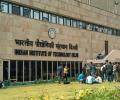
The eight-month intensive programme is designed to help professionals develop comprehensive expertise across both data science and decision science, said IIT-Delhi.

A Kishore Kumar song, a birthday cake, a prince's break from protocol to thank his driver, a Persian painting on the ceiling of the presidential residence -- the BRICS Summit had many memorable moments.

The Union health ministry has deployed a National Joint Outbreak Response Team (NJORT) to Gujarat and Rajasthan to strengthen the response to the ongoing Chandipura Virus Disease (CHPV) outbreak.
